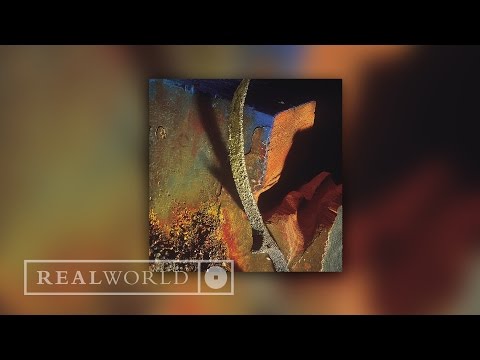
Nusrat Fateh Ali Khan
Mustt Mustt
Read
Narration sentence highlighting is idle.
The pocket is settled almost before the track has a face. Within two seconds the pulse is locked — quick, even, light on its feet — tabla ticking, harmonium spreading warmth across the top, a rounded low cushion underneath that feels more studio than shrine, Michael Brook holding the door open between qawwali and the dancefloor. Nusrat Fateh Ali Khan's voice comes in on top of it, and by 0:12 the opening line is already turning over on itself: dam mast qalandar mast mast. Mast means intoxicated, rapt. The words announce it; the groove is already the proof.
The first minute thickens strand by strand rather than in waves. The party starts answering his calls, the tabla busies up, and around the minute mark the singing hardens — higher, more insistent over an unchanged figure. Pressure arrives in layers, each cycle a little more crowded than the last, until the voice peaks and then, at 1:42, everything exhales at once: the singing drops from full cry into rapid sargam, syllables of the scale tumbling out, and handclaps arrive to fill the space the melody just left.
That opens the long middle, the trance proper. For nearly two minutes the voice leaves words entirely — sargam runs, then wordless tarannum, cries traded with the chorus — over a tabla figure that never changes. The parts sit loosely against the grid, each landing a hair in its own relation to the pulse, which keeps the repetition breathing instead of looping. This is the track's real argument: not escalation but duration, a groove held so steadily and so long that time stops passing and starts pooling.
Words come back at 3:39 like a hinge turning. Aakhi ja malanga — the malang, the wandering dervish — and a promise folded into the lines: today or tomorrow everyone will be saying the name Ali. The figure hasn't moved since the opening minute, so the prophecy sounds matter-of-fact, something the rhythm has known all along. Then the title reveals itself as pure percussion — mast mast mast mast dam — four punches of the word and a struck breath, a hook built from the name for rapture.
When the opening chant returns, it's recognizably the same phrase but no longer the same event. The claps are in now, the chorus answers wider, three minutes of accumulation stand behind the words, and what began as invocation lands as recognition — the whole room saying it back.
The ending is a clean cut. Near 5:08 the band stops on a dime — tabla, claps, harmonium, all of it — and a last vocal chord hangs in the cleared air, ringing for a moment before it fades. After five minutes of unbroken motion, the last sound in the room is a voice.
Last updated Aug 19, 2026 · Written with GLM 5.2 · Galdr 0.7.0.dev0 · Inner Ear Gemini 3.5 Flash Lite
Now playing
Mustt Mustt
Nusrat Fateh Ali Khan

galdr analysis
Click play to load galdr data.