Metallica
Metallica: Enter Sandman
Read
Narration sentence highlighting is idle.
A single clean guitar picks a creeping figure into empty space, each note left hanging long enough to feel like a warning. A darker line doubles it, then a low muted rhythm starts chewing underneath. Around 0:24 the distortion lands on one hard chord and the full band locks in—drums and bass slamming the pocket shut, guitars chugging in a thick, forward motor that does not ask permission. The pulse is quick and settled; the body takes it before the mind has decided.
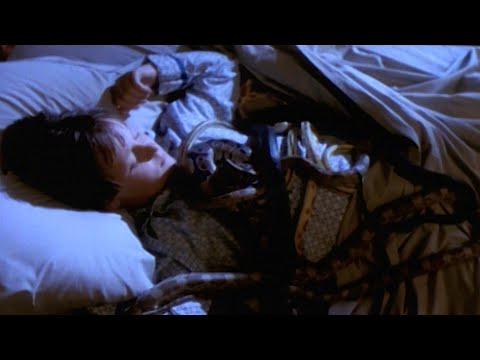
Hetfield’s voice arrives low and muttered over that wall, half-spoken, half-snarled, as if leaning over a bed. Say your prayers, little one—the nursery cadence rides the heavy groove without softening it. Warmth and threat share the same breath: tucked in, free from sin, until the sandman comes. The pre-chorus tightens the grip—Sleep with one eye open / Gripping your pillow tight—and then the chorus opens the room wide: Exit light / Enter night. The guitars climb and the vocal hardens into something closer to a command than a lullaby. Take my hand / We’re off to never-never land does not comfort; it escorts.
The second verse darkens the inventory—war, liars, dragon’s fire, things that bite—while the chugging guitars and locked drums press the same forward motor underneath, giving the darker words no softer landing. The chorus returns with more weight behind it, then the guitars peel off into a soaring, screaming solo that rides the locked pulse rather than breaking it. When the solo winds down, the riff drops into a heavier rhythmic grind. Spoken prayer lines enter over the chug—Now I lay me down to sleep—answered by stacked voices, the old childhood formula dragged across distortion until Hush, little baby names the beasts under the bed, in the closet, in the head.
The final chorus multiplies: Exit light / Enter night / Grain of sand, then the hand again, never-never land repeated until it becomes the only destination left. A sudden Boo! cuts through, half joke, half jolt. After 4:47 the stomping riff and drums grind on under the circling refrain—We’re off to never-never land / Take my hand—each pass a little more worn into the groove. Pressure eases without the motor quitting. Guitar feedback thins the wall, the phrase drops back, and the last sustain fades into silence, the sandman gone and the dark still open.
Last updated Aug 21, 2026 · Written with Grok 4.5 · Galdr 0.7.0.dev0 · Inner Ear Gemini 3.5 Flash Lite
Now playing
Metallica: Enter Sandman
Metallica

galdr analysis
Click play to load galdr data.