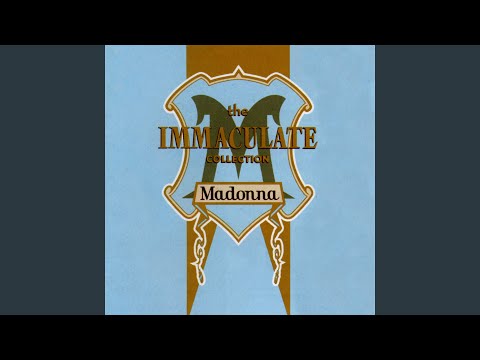
Madonna
Like a Prayer
Read
Narration sentence highlighting is idle.
The opening makes private address feel ceremonial before the beat fully claims it. A churchlike signal, a close lead voice, and a quick-gathering pulse all arrive in the first seconds. At 0:09 the lyric begins with solitude and mystery, and by 0:18 the call of a name is already changing the scale of the room. The word "home" lands at 0:23 as the first real hinge: intimacy becomes a place the rhythm can enter.
The groove is settled by the first chorus. At 0:37 the title image opens, and the arrangement answers by widening the room. Drums and bass keep a light, reliable grid while the backing voices start to turn the private call into a shared space. The phrase "little prayer" works because the song has already made prayer physical as motion with a ritual frame around it.
From 0:55 the second verse keeps the body moving while the lyric imagines surrender. The voice is heard as angelic, then the singer gives up choice, then the image turns to flight. By 1:16 she is falling, but the track refuses to fall with her. The beat stays upright under the plea for help at 1:26, so the arrangement contains the collapse before it can break the song open.
The return at 1:29 carries more force because the fall has not stopped the motion. The chorus keeps making devotion danceable, and the rock edge in the surface gives the clean dance grid a burn. The lyric keeps confusing prayer, desire, and transport; the band keeps those confusions in time.
At 2:01 the song names dancing directly, and by 2:18 the choir is invited in. That line is the public door. The lead no longer feels alone at the center of the experience; the backing voices become architecture, pressing the refrain outward. Gospel scale, rock edge, and dance-pop count leave the sacred/body ambiguity unresolved and moving.
The long section from 3:03 onward returns to the opening words, but now solitude has been surrounded. The phrases about mystery, voice, dream, and being taken there circulate until they behave less like narrative and more like rhythmic material. Around 3:46 the repeated "take you there" stops sounding like a single promise and becomes the song's direction of travel. Each pass keeps the destination near and unresolved.
After 4:12 the refrain keeps folding back on itself. Voice can take, prayer can take, dream can take; the words overlap while the pulse stays clean underneath. Its power is in sustained transfer. Private trembling has become a public engine, and the choir keeps that engine bright.
In the last minute, the repeated prayer fragments lengthen and thin. The motion begins to unclench after 5:22, and by the final held returns the track is no longer building; it is letting the ceremony spend itself. “Like a Prayer” leaves desire and devotion unresolved on purpose. The beat has carried them together for nearly six minutes, and the choir has made the private call large enough to stand in.
Last updated Jul 13, 2026
Now playing
Like a Prayer
Madonna

galdr analysis
Click play to load galdr data.