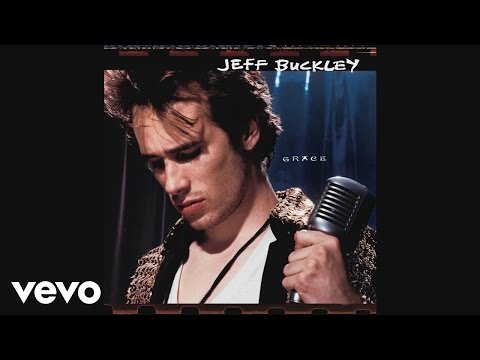
Jeff Buckley
Lover, You Should've Come Over
Read
Narration sentence highlighting is idle.
The room opens on reed organ alone—slow chords that breathe and swell without hurry, a private church of air and wood. Acoustic guitar arrives a little later, strumming into that pad, still unhurried. Then around 0:43 the pocket locks: drums and warm bass settle a slow soul groove under the organ, and the body can sit. Soft voice enters close, almost conversational. Rain falls on funeral mourners, shoes filling with water—the image sits heavy against that unhurried drum pocket and bass line, which leave the weight entirely on the voice. Maybe I'm too young to keep good love from going wrong. The delivery stays gentle even as the ache clarifies: broken down, hungry, nowhere to feed it.
The groove never rushes. It holds him while the register climbs and the tone thickens. Too young to hold on, too old to break free and run—the contradiction lands without theatrics, just the voice leaning harder into the pocket. Sometimes a man gets carried away; sometimes he wakes to find he has no one. When he promises to wait and burn, asking if he’ll ever see the sweet return, organ swells and the drums lift under him without breaking the slow pulse. The first title line arrives already half-sung, half-confessed: Lover, you should've come over—because it isn’t too late.
The mix drops after that plea. Lonely room, made bed, open window letting the rain in; someone burning in the corner who only dreams he had her. The voice softens into that smaller space, then begins the long climb again. It's never over—kingdom for a kiss on the shoulder, riches for her smile, blood for the sweetness of her laughter. Each offer rises higher, the organ and cymbals gathering weight under the moving pulse, the refrain turning from statement into something closer to a wound that won’t close. She’s the tear that hangs inside the soul forever.
By the five-minute mark organ, guitars, and cymbals are fully open and the voice has nowhere left to hide. The too-young, too-old admission returns harder now—deaf, dumb, and blind to the damage—before the title plea comes back as sweet lover. How long will I wait. Then the word itself becomes the only remaining lyric: lover, lover, lover, stacked and stretched until the syllables blur into pure need. Around 6:12 the full line finally resolves—you should've come over—and almost immediately the pressure begins to release.
The rhythm section eases, the voice drops to a closing whisper, and the last guitar chord and organ resonance simply ring out into quiet. No grand final statement. Just the room emptying the way it filled: slow, held, unfinished.
Last updated Aug 26, 2026 · Written with Grok 4.5 · Galdr 0.7.0 · Inner Ear gemini-3.7-flash
Now playing
Lover, You Should've Come Over
Jeff Buckley

galdr analysis
Click play to load galdr data.