← Back

In This Moment

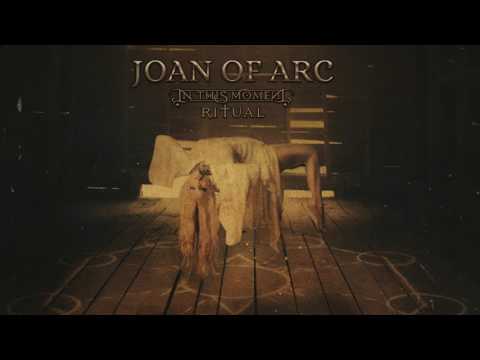
Joan of Arc

Listen on YouTube

A quick grid snaps into place within the first couple of seconds, and the body understands it before the lyric world has fully declared itself. The beat is fast, cleanly carried, almost ceremonial in its insistence. There is weight underneath, but it is not a swamp; the track moves forward with a firm floor and a bright upper edge, the kind of rock pressure that keeps marching instead of collapsing into drag. The low force has gathered enough to make the motion feel claimed. The arrangement gives me a runway, then keeps using that runway as a discipline.

When the voice enters, it does not float above the machine. It stands in it. The first accusation, "You keep pushing me right to the edge," arrives already fitted to the pulse, so the line feels driven forward rather than confessed. The words keep putting blame in motion: "You are sanctified and I’m just a mess," then "you blame me for, blame me for everything you hate." The repetition has a tightening effect. It is not just the idea of being blamed; it is the way the phrase comes back inside a rhythm that will not loosen its hand. The weight returns under the verse, then lifts again giving the section a hard inhale-exhale without ever breaking the stride.

The pre-chorus pressure is built from steadiness more than surprise. "God what have I done" appears like a flare inside the arrangement, a question thrown upward while the instruments keep their forward count. The track does not pause to answer it. Around 0:50 the floor thickens again, and the chorus turns the accusation into spectacle: "You can crucify — you can nail me to your cross." The voice widens with the image. The guitars and drums hold the frame square, and the repeated invitation to blame, sacrifice, and make a martyr pushes the body deeper into the groove. When "I’ll be your Joan of Arc" lands, the title stops being a distant historical costume and becomes the track’s operating posture: a person being made symbolic while the beat keeps feeding the fire.

The word "Burn" is the hard hinge. It gives the chorus a flash point, and the arrangement treats it like a command that has already been lit. After the first chorus, around 1:14, the track reclaims the same stable runway. The pulse remains almost stubbornly usable; even when accents lean around the beat, the center does not scatter. I can feel small shifts in where the hits bite, little sideways sparks in the grid, but the song’s larger lock stays intact. The theatricality works through restraint here: it could tear open constantly, but it keeps returning to the same march, as if endurance is part of the punishment.

The second verse sharpens the physical disgust of the scene: "You want to touch my face with your dirty hands." The line changes the air around the voice. The blame is no longer abstract; it comes close enough to leave marks. By 1:31 the lower weight gathers again, and the repeated "you blame me for" has the feel of a legal charge being stamped in time. The answering turn, "and I wage my war cause either way you’ll burn me at the stake," matters in the body because the rhythm never gives the voice a clean escape route. The war is sung from inside the same mechanism that threatens the stake.

The second chorus returns with more recognition than surprise. The words are familiar now, so attention moves from what they say to how firmly they are made to recur. "Go ahead blame me for your sins" becomes less a plea than a dare shaped by repetition. The chorus does not explode into chaos; it locks into a bright, heavy chant-space. That steadiness keeps the martyr image from becoming purely melodramatic. The track is interested in being pinned down, named, condemned, and then using that exact frame as fuel.

Around 2:19 the music stays on its runway but the attacks begin to feel more restless, flickering harder around the beat. The pulse remains clear, yet the surface carries more agitation, like sparks thrown off a wheel that is still turning perfectly. At about 2:36 the weight comes back in a more deliberate way, and by 2:46 there is a small fracture in the pattern — not a collapse, more like the floor jolting under a stride that keeps going. That little disruption gives the late return extra bite. The track has spent most of its time proving how firmly it can hold one direction; the disturbance makes the hold feel chosen, not automatic.

From 3:00 forward, the song starts aiming at its end without slowing the march. The martyr language has already been burned into the frame, and the final pushes feel like the arrangement tightening the last straps. Around 3:20 some of the weight lifts, then at 3:24 the pressure releases enough for the ending to come into view. A last gathering near 3:27 gives the body one more pull, and then the phrase drops back. At 3:32 the pattern lets go. By 3:34 the pulse has stopped carrying me, and the remaining space empties quickly, leaving the final seconds as a released shell rather than a lingering fade.

The force arrives through repetition: blame returns, the cross returns, the stake returns, and the beat keeps making those images physical. Its harmonic world stays warm and centered enough to support the ritual, while the bright edges and hard rhythmic frame keep the scene from softening. I hear less wandering than enclosure; the song builds its drama by staying inside a fast, steady lock and forcing every accusation through it. When the ending cuts the motion loose, the silence feels like the fire has gone out but the outline of the figure is still visible.

Listening Signal

Example Galdr signal analysis graph

Galdr analysis

Click play to load Galdr data.

Now playing

Joan of Arc

In This Moment

0:000:00

Click play to load Galdr data.

Music signal

body
0.00steady
weight
0.00steady
density
0.00steady
surface
0.00steady
pressure
0.00steady

Surface evidence

balance
0.00steady
rough
0.00steady
noise
0.00steady
attack
0.00steady
sustain
0.00steady
band
0.00steady
motion
0.00steady
punch
0.00steady
bass
0.00steady
body band
0.00steady
presence
0.00steady
air
0.00steady
bright
0.00steady
perc
0.00steady

Harmony + melody

pull
0.00steady
coherence
0.00steady
chroma
0.00steady
anchor
0.00steady
key
0.00steady
mode
0.00steady
melody
0.00steady
range
0.00steady
pitch
0.00steady

Galdr concepts

attention
0.00steady
pattern
0.00steady
release
0.00steady
debt
0.00steady
gravity
0.00steady

Derived motion

rms
0.00steady
peak
0.00steady
onset
0.00steady
low
0.00steady
mid
0.00steady
high
0.00steady
flux
0.00steady
← Back