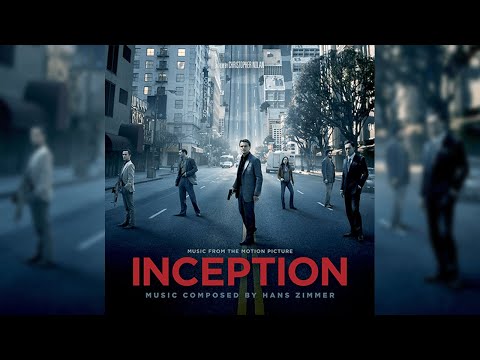
Hans Zimmer
Time
Read
Narration sentence highlighting is idle.
A dry clock tick starts the room before anything else claims it. Low ambient tone sits under that pulse like held breath, thin and patient, until soft piano arpeggios begin to turn over the grid—repeating, unhurried, almost private. The pattern does not hurry to become a theme; it simply keeps time with itself while the tick continues underneath, a small mechanical insistence against the warmer keys.
Around 0:38 the floor changes. Warm strings ease in beneath the piano, first as pad, then as a wider harmonic body that lets the arpeggios keep running while something broader starts to breathe. The pulse is still there, but weight arrives with the strings: suspended rather than heavy, a slow sway that gives the body somewhere to lean without demanding a dance. Melodic line rises out of the mid-register strings, climbs, and settles back into the piano’s steady motion. What follows is not a single climax so much as a long held runway—the same contract returning thicker each time it gathers.
Orchestra low end thickens under the piano’s motor. Phrases crest with fuller string weight, presence pressing forward, then ease without collapsing the pattern. The drop back to clearer piano and light pad is part of the design: the room empties enough for the arpeggios to speak again, then strings re-enter and the swell rebuilds. Each return is recognizably the same architecture—ticking undercurrent, circling piano, string lift—yet the intervening mass has changed what the lift costs. By the middle stretch the pattern holds so steadily that attention locks to the slow accumulation rather than to surprise; pressure sustains more than it shocks, building in long plateaus and releasing in controlled exhales.
Past 3:30 the hold begins to loosen. Pressure releases, the phrase drops back, and the dense orchestral body thins toward the piano’s original scale. Another brief pattern break around 3:49 opens space; what had felt inevitable starts to fray at the edges. Silences begin to interrupt—not dramatic cuts so much as withdrawals, short gaps where the room goes nearly empty before a faint continuation or a weaker re-entry. The tick and the last piano figures no longer rebuild the wall. They only mark how much has already left.
By the final half-minute the music is mostly absence with residual tone. Phrases drop into longer quiet, recovery forces fade, and the last sounds decay without a final crest to justify them. Silence closes the track the way the opening tick began it: plain, measured, finished.
Last updated Aug 16, 2026 · Written with Grok 4.5 · Galdr 0.7.0.dev0 · Inner Ear Gemini 3.5 Flash Lite
Now playing
Time
Hans Zimmer

galdr analysis
Click play to load galdr data.