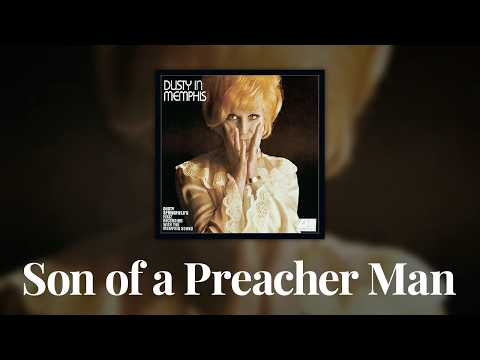
Dusty Springfield
Son of a Preacher Man
Read
Narration sentence highlighting is idle.
The organ starts it warm and unhurried, a curling lead line over walking bass and light drums that already know the pocket. Nothing heavy lands; the groove simply settles in and takes the body with it, motor steady, surface open. Dusty enters almost casually over that floor, voice smooth and close, naming Billy Ray as a preacher’s son who came along when his daddy visited. The story walks out through the back yard with her while the band keeps its easy forward pull underneath.
When the claim arrives it lands clean: the only one who could ever reach her was the son of a preacher man. Backing voices lift around the line and the pocket deepens without rushing. Near 0:40 the horns step in with short bright punches, thickening the air behind her insistence that he was the only boy who could teach her. The affirmations roll easy—yes, he was—half confession, half smile, while the rhythm section never breaks its hold.
The second verse keeps the same settled floor. Being good isn’t always easy, no matter how she tried, and when he started sweet-talking the groove doesn’t tighten or scold; it simply carries the admission forward. He’d kiss and tell her everything is all right, then the question slips out—can she get away again tonight?—still riding that comfortable pulse. Horns ease back for a stretch, leaving organ and rhythm section to hold the room while she circles the memory.
The chorus returns fuller, then the song leans into recollection: the look in his eyes, stealing kisses on the sly, taking time to make time, learning from each other. By the late stretch the horns and backing voices are fully in again, Dusty riding the sweet-talking, sweet-loving refrain with light ad-libs that keep pleasure alive rather than driving toward any rupture. The pattern holds almost to the end, that motor never really breaking, until the fade loosens everything after 2:24 and voice and band thin together into the last soft traces.
Last updated Aug 15, 2026 · Written with Grok 4.5 · Galdr 0.7.0.dev0 · Inner Ear Gemini 3.5 Flash Lite
Now playing
Son of a Preacher Man
Dusty Springfield

galdr analysis
Click play to load galdr data.