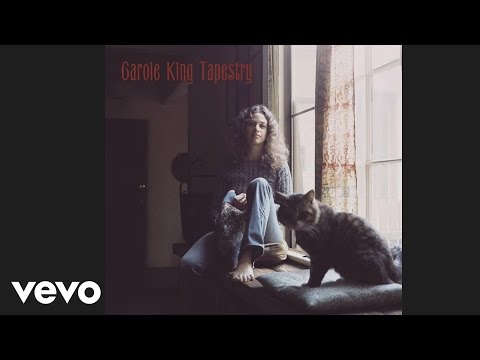
Carole King
It's Too Late
Read
Narration sentence highlighting is idle.
The first second is bare enough to make the entrance feel placed, not accidental: a small pocket opens, then the piano riff starts working immediately with bass and light drums. It is not a dramatic arrival so much as a contract. The rhythm is steady, the surface warm, the attacks clean but not hard, and the body finds the grid before the song asks for much else. When the voice enters just after that, soft and close, it sits inside an already-moving room rather than creating the room by itself.
That early verse keeps its pleasure in proportion. Piano is the recognizable hand on the wheel, bass and drums give the motion a moderate step, and the guitar colors the side of the groove without pulling focus. Around 0:26, the strings slide in underneath, not as a cinematic announcement but as a widening of the fabric. The singer stays smooth through that widening, and then the first chorus, near 0:30, thickens the arrangement: the rhythm section feels fuller, the strings have more say, and the vocal projects with a little more front edge. The lift is earned by density and placement, not by force.
After the chorus, the vocal loosens into descending melismatic figures, those little softened falls that let the groove keep turning while the words recede into sound. The brief instrumental space around 0:52 is one of the track’s small graces: piano and guitar stay rhythmically articulate, bass and drums keep the pocket intact, and the absence of the voice makes the arrangement’s patience easier to hear. When the second verse comes back, it is recognizably the same shape, but the ear now knows how the strings will arrive and how the chorus will broaden; the return feels less like repetition than like the song settling into its preferred circulation.
The middle opens the frame without breaking the pulse. Around 1:35, after another chorus and another softened vocal descent, a soprano saxophone takes the lead over the same piano-bass-drum foundation. Its tone gives the song a glassy, singing line that extends the vocal tenderness without imitating the singer. Then clean electric guitar moves into the solo space, more pointed in attack but still tasteful, still inside the track’s restraint. The strings returning beneath these exchanges matter because they keep the instrumental section from becoming merely a break; sax, guitar, piano, bass, and drums are all participating in the same warm continuation.
The third vocal entrance is gentle again, and by now that gentleness has a different weight. It is not the first statement of intimacy; it is the voice rejoining a groove that has been kept alive for it. The chorus return around 2:30 carries the richest version of the song’s familiar bloom, with projected vocal, strings, and rhythm section gathered together. Still, the recording never chases a hard peak. Its strength is steadiness: the pulse captures the body, but the groove remains soft-edged enough to sway rather than command.
Late in the track, the singer’s ad-libs and spaced title-like phrases share the foreground with the saxophone, and the song starts to feel less like it is heading somewhere than enjoying the fact that it can stay. By about 2:56, the outro has settled into that vamp: piano chords, bass movement, light drums, guitar touches, and sax lines threading through the open spaces. The vocal eventually leaves, and the instruments keep the social warmth going a little longer, easing rather than cutting away. Near 3:47 the motion finally loses its hold; the groove releases, the sound empties, and the last seconds are silence instead of a final flourish.
Last updated Aug 28, 2026 · Written with GPT-5.5 · Galdr 0.7.0 · Inner Ear gemini-3.7-flash
Now playing
It's Too Late
Carole King

galdr analysis
Click play to load galdr data.