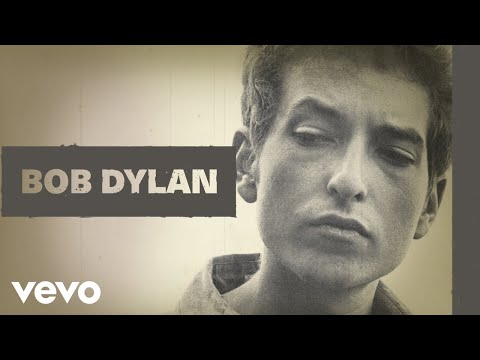
Bob Dylan
The Times They Are A-Changin'
Read
Narration sentence highlighting is idle.
A brief silence, then guitar and harmonica together — two instruments opening a folk melody that already carries the shape of what's coming. The strumming settles into a steady pulse almost immediately, and by the time the voice enters, the rhythmic ground is laid. No band arrives. No drums. No bass. Just the guitar's strumming, the harmonica's color, and a voice that begins as if the song has always been running and this is simply where we tune in.
Come gather 'round, people wherever you roam — the first line is an invitation, but the pulse underneath is already a march. That's the tension the recording never resolves and never tries to: the words gather and warn and prophesy, while the music simply moves forward, step after step, with the certainty of something that will not be hurried or turned aside. The body finds the pulse early and holds it. The weight stays suspended — not heavy, not light, just held, the way a slow current holds whatever floats in it.
Each verse summons a different audience. Writers and critics, then senators and congressmen, then mothers and fathers — the address narrows from the general to the specific and widens again into something universal. The harmonica plays a short interlude between verses, the same melodic territory each time, a breath between proclamations. The guitar holds its strumming. The voice never rises to shout. Around 1:20, in the third verse, something shifts in the weight — not a dramatic turn, but a slight deepening, as though the song's accumulated momentum has added a gravity the arrangement didn't provide on its own. The words about windows shaking and walls rattling are carried by the same steady strum that held everything before.
The fourth verse addresses parents whose children have outgrown their command, and the refrain returns unchanged. Then a longer harmonica passage — nearly twenty seconds — before the final verse at 2:36. And here the lyric turns. Every previous verse opened with Come — a summons, an imperative, a hand extended. The last verse drops the invitation entirely: The line it is drawn, the curse it is cast. The music doesn't shift to match. The guitar keeps its pattern, the pulse keeps its pace, and the declaration lands inside the same frame that held all the invitations. That's where the song's real pressure lives — not in any musical climax, but in the moment the voice stops asking and starts stating, and the march underneath doesn't change at all.
The final refrain arrives at 2:59, and then the harmonica takes the outro. The pressure releases, the phrase drops back, and the instruments thin toward a last chord that decays into silence by 3:11. The same pulse that held from the first strum simply lets go.
Last updated Aug 15, 2026 · Written with GLM 5.2 · Galdr 0.7.0.dev0 · Inner Ear Gemini 3.5 Flash Lite
Now playing
The Times They Are A-Changin'
Bob Dylan

galdr analysis
Click play to load galdr data.