BABYMETAL
Megitsune
Read
Narration sentence highlighting is idle.
The first sound does not ease in; it plants a fast metal grid immediately, drums and chugging guitar already moving as if the song has opened on a festival procession at sprint speed. Then, around 0:09, the flute-like traditional melody cuts across the distortion, not softening it so much as giving the riff a mask and a grin. The early chants — それ それ それ — turn the beat into call-and-response ceremony, and the body gets the point before the lyric has to explain anything: this is metal built as parade rhythm, exact enough to lock onto, loose enough in the accents to keep the surface flickering.
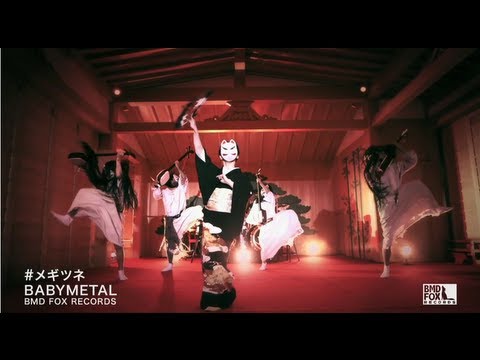
When the first playful verse phrases arrive, the voices ride the heaviness rather than competing with it. The delivery is bright, quick, almost teasing, with little festival interjections tucked between lines, while the drums and guitars keep the motion pressed forward. The fox imagery feels enacted in the arrangement: sudden vocal darts, chanted tails, a rhythm section that never loses the chase. By the time the line about transformation lands — the seven changes, the fox calls — the song has made its own shapeshifting audible, folding idol-game brightness into blast-speed metal without treating either side as a joke.
The clean lead vocal that opens the next section gives the track its first real lift. The band is still driving, but the voice stretches the room vertically, turning the earlier chants into a runway for melody. At about 1:12, the chorus blooms on the claim that a woman is always an actress, and the music tightens around it rather than merely decorating it: the vocal line is poised and shining, the guitars stay hard-edged below, and the lyric’s smile-through-tears idea gets pressure from both sides. 顔で笑って心で泣いて is not delivered as collapse; it is sung with control, so the ache lives inside the composure.
The middle break refuses to let the pulse go. After the chorus, the arrangement drops into sharper chugs and then opens space for the traditional melody again, drums pounding underneath while the flute color flashes above. Around 1:53, the heavy band returns with a clear, forceful re-entry, and the instrumental passage that follows feels less like a solo showcase than a tightening of the ritual: guitar speed, double-kick drive, and festival color all feeding the same motor. The track keeps borrowing old forms of ceremony — chant, flute, procession — and running them through amplified machinery until they feel like one language.
When the chants return near 2:20, they have more weight because the song has already shown its melodic face. The repeated そいや calls do not interrupt the metal section; they become another percussive layer, syllables striking the grid like handclaps or drum hits. Then the verse material comes back changed by everything around it. The ancient maidens and temporary dreams are no longer just scene-setting; the band’s sustained speed makes them feel carried across time in the literal motion of the track, past and present joined by the same relentless beat.
The final stretch raises the vocal drama without letting the arrangement blur into mush. At 3:03 the chorus returns larger, and the line that pushes back — なめたらいかんぜよ — lands with a sharper bite inside the otherwise clean, high melody. Fireworks, blooming and scattering, smiling while crying: the lyric images gather into a performance of femininity as both display and armor, and the music matches that doubleness by keeping the voice radiant over guitars that never stop bearing down. The last high vocal line hangs over the final hit around 4:08, and the body lock finally loosens into the brief empty tail immediately after it.
Last updated Aug 18, 2026 · Written with GPT-5.5 · Galdr 0.7.0.dev0 · Inner Ear Gemini 3.5 Flash Lite
Now playing
Megitsune
BABYMETAL

galdr analysis
Click play to load galdr data.